
-
 Become an influential brand in the world industry!
The company was established in 2008 and is located in Botou, Hebei, a famous casting city in China. -
Products
We continue to develop and create high quality but affordable products
The company is divided into two major factory areas in the north and south. -
Push forward without end
Products are widely used in industrial and civil buildings, such as factories, warehouses, gymnasiums, exhibition halls and other houses and walls. The company has a high starting point and an early start in the products of tile pressing forming and high-altitude tile pressing forming operation platform.
language
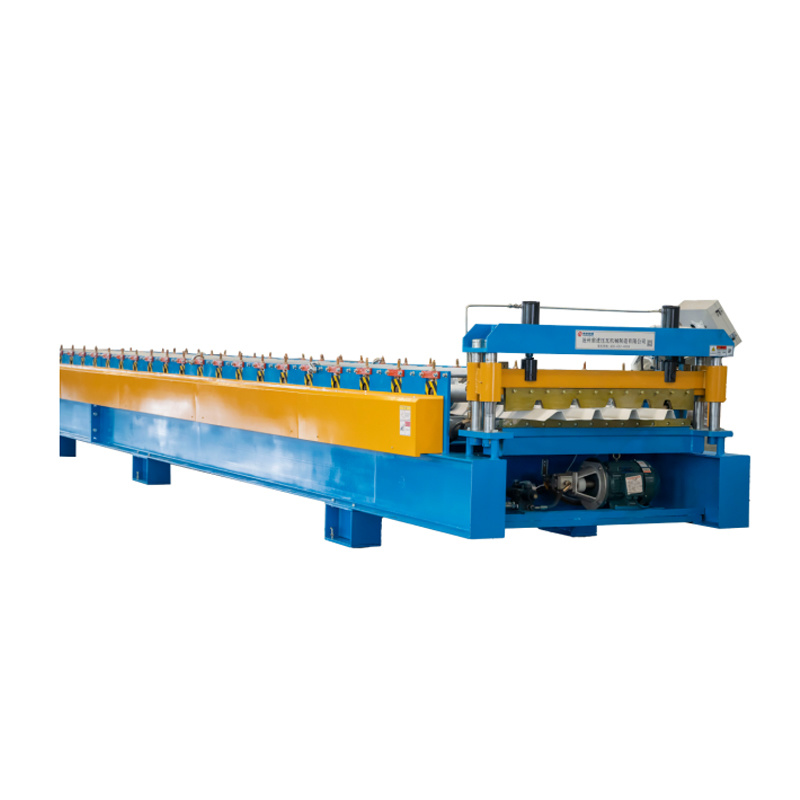
Understanding Roll Forming Line Machines: A Comprehensive Guide for Professionals
---
Roll forming line machines are pivotal in the manufacturing industry, particularly for producing metal components with consistent cross-sections. These machines are designed to gradually shape metal sheets or strips into desired profiles through a series of rollers. The process is efficient and capable of producing high volumes of parts with precise dimensions, making it a go-to solution for various applications.
The operation of a roll forming line machine begins with a flat metal strip being fed into the machine. As the strip moves through a series of roller stations, each roller gradually bends the metal into the desired shape. The design of these rollers is critical, as they dictate the final profile of the product. The machinery usually includes a variety of components such as feeding systems, roll stands, and cutting devices, which work together to ensure a seamless production process.
One of the standout features of roll forming line machines is their efficiency in producing complex shapes. Industries ranging from automotive to construction rely on these machines for their ability to create components like roof panels, structural beams, and framing systems. The continuous nature of the roll forming process allows for high-speed production, significantly reducing lead times compared to traditional methods.
Moreover, roll forming line machines offer excellent repeatability and precision. Once set up, these machines can produce thousands of identical components with minimal variation, ensuring high-quality output. This consistency is vital for industries requiring strict adherence to specifications, such as HVAC, where parts must fit together seamlessly.
In addition to their production capabilities, roll forming line machines are also known for their versatility. They can handle a variety of materials, including steel, aluminum, and copper, which broadens their applicability across different sectors. The ability to customize the roller setup allows manufacturers to switch between product lines without extensive downtime, enhancing overall productivity.
When considering the implementation of a roll forming line machine, it's essential to assess the specific needs of your manufacturing operation. Factors such as material type, desired production volume, and end-product specifications should guide the selection process.
In conclusion, roll forming line machines are an invaluable asset in the manufacturing process, providing efficiency, precision, and versatility. Understanding their operation and benefits can empower professionals to make informed decisions in their production strategies, ensuring they remain competitive in a rapidly evolving industry. As technology continues to advance, staying abreast of developments in roll forming technology will be crucial for leveraging its full potential.
Roll forming line machines are pivotal in the manufacturing industry, particularly for producing metal components with consistent cross-sections. These machines are designed to gradually shape metal sheets or strips into desired profiles through a series of rollers. The process is efficient and capable of producing high volumes of parts with precise dimensions, making it a go-to solution for various applications.
The operation of a roll forming line machine begins with a flat metal strip being fed into the machine. As the strip moves through a series of roller stations, each roller gradually bends the metal into the desired shape. The design of these rollers is critical, as they dictate the final profile of the product. The machinery usually includes a variety of components such as feeding systems, roll stands, and cutting devices, which work together to ensure a seamless production process.
One of the standout features of roll forming line machines is their efficiency in producing complex shapes. Industries ranging from automotive to construction rely on these machines for their ability to create components like roof panels, structural beams, and framing systems. The continuous nature of the roll forming process allows for high-speed production, significantly reducing lead times compared to traditional methods.
Moreover, roll forming line machines offer excellent repeatability and precision. Once set up, these machines can produce thousands of identical components with minimal variation, ensuring high-quality output. This consistency is vital for industries requiring strict adherence to specifications, such as HVAC, where parts must fit together seamlessly.
In addition to their production capabilities, roll forming line machines are also known for their versatility. They can handle a variety of materials, including steel, aluminum, and copper, which broadens their applicability across different sectors. The ability to customize the roller setup allows manufacturers to switch between product lines without extensive downtime, enhancing overall productivity.
When considering the implementation of a roll forming line machine, it's essential to assess the specific needs of your manufacturing operation. Factors such as material type, desired production volume, and end-product specifications should guide the selection process.
In conclusion, roll forming line machines are an invaluable asset in the manufacturing process, providing efficiency, precision, and versatility. Understanding their operation and benefits can empower professionals to make informed decisions in their production strategies, ensuring they remain competitive in a rapidly evolving industry. As technology continues to advance, staying abreast of developments in roll forming technology will be crucial for leveraging its full potential.
Key words:
recommend News
Share
Cangzhou Forward Roll Forming Machinery Manufacturing
Telephone: +86 0317 8308862
Mobile: +86 187 3373 6699
E-mail:info@rollformingmills.com
Skype:james521520
Address: China Hebei Cangzhou Botou City 104 National Road East
Website QR Code

Business License