
-
 Become an influential brand in the world industry!
The company was established in 2008 and is located in Botou, Hebei, a famous casting city in China. -
Products
We continue to develop and create high quality but affordable products
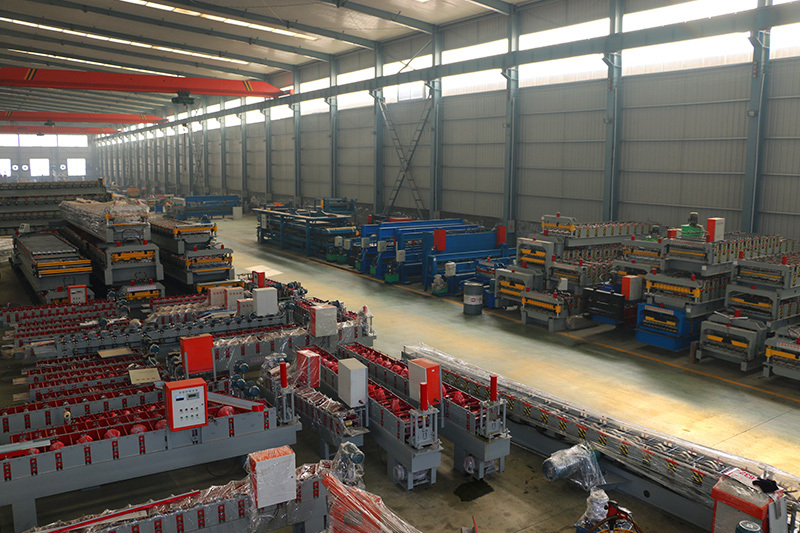
The company is divided into two major factory areas in the north and south. -
Push forward without end
Products are widely used in industrial and civil buildings, such as factories, warehouses, gymnasiums, exhibition halls and other houses and walls. The company has a high starting point and an early start in the products of tile pressing forming and high-altitude tile pressing forming operation platform.
language
Exploring the Applications of Automatic Roll Forming Machines in Various Industries
Exploring the Applications of Automatic Roll Forming Machines in Various Industries
Table of Contents
- 1. Introduction to Automatic Roll Forming Machines
- 2. What is Roll Forming?
- 3. Types of Automatic Roll Forming Machines
- 4. Industries Utilizing Automatic Roll Forming Machines
- 4.1 Applications in the Construction Industry
- 4.2 Applications in the Automotive Industry
- 4.3 Applications in the Electronics Industry
- 4.4 Applications in the Furniture Industry
- 4.5 Applications in Other Industries
- 5. Benefits of Using Automatic Roll Forming Machines
- 6. The Future of Roll Forming Technology
- 7. Frequently Asked Questions
- 8. Conclusion
1. Introduction to Automatic Roll Forming Machines
Automatic roll forming machines are pivotal in modern manufacturing, known for their ability to produce high-quality, complex shapes with remarkable efficiency. These machines can create a vast array of products, from metal roofing panels to structural components, making them indispensable across various sectors. As industries increasingly demand precision and speed, the role of automatic roll forming machines continues to expand.
2. What is Roll Forming?
Roll forming is a continuous bending operation in which a long strip of metal, usually coiled steel, is fed through successive pairs of rolls. Each pass through the rolls incrementally shapes the material into the desired profile. This method is highly efficient for producing large quantities of parts with consistent dimensions and high-quality finishes.
3. Types of Automatic Roll Forming Machines
Automatic roll forming machines can be categorized based on their functionality and design. Understanding these variations can help industries select the right machine for their specific needs.
3.1 Standard Roll Forming Machines
Standard roll forming machines are designed for general applications and can produce a wide variety of profiles. They typically feature adjustable rollers to accommodate different materials and shapes.
3.2 High-Speed Roll Forming Machines
These machines are engineered for high-speed production, suitable for large-scale manufacturing. They are ideal for industries requiring rapid output without sacrificing quality.
3.3 Precision Roll Forming Machines
Precision roll forming machines focus on producing components with tight tolerances. These machines are essential in sectors where exact specifications are crucial, such as aerospace and automotive manufacturing.
4. Industries Utilizing Automatic Roll Forming Machines
The versatility of automatic roll forming machines allows them to be utilized across various industries, each with unique applications and demands.
4.1 Applications in the Construction Industry
In the construction sector, automatic roll forming machines play a significant role in producing components such as metal roofing, siding, and structural framework. These machines enable manufacturers to create durable and lightweight materials that meet stringent building codes while enhancing overall architectural design. The ability to customize profiles and produce components on demand helps streamline construction timelines.
4.2 Applications in the Automotive Industry
The automotive industry relies heavily on roll forming technology to manufacture components like chassis, brackets, and floor pans. With the increasing push towards lightweight materials for better fuel efficiency, roll forming machines have adapted to process advanced materials, including aluminum and high-strength steel. The precision offered by these machines ensures that each part is manufactured to exacting standards, crucial for vehicle safety and performance.
4.3 Applications in the Electronics Industry
In electronics, automatic roll forming machines are utilized to create enclosures, brackets, and other components that require intricate designs and precise dimensions. As consumer electronics evolve, manufacturers leverage the versatility of roll forming machines to produce lightweight yet robust parts that can withstand the rigors of everyday use while maintaining aesthetic appeal.
4.4 Applications in the Furniture Industry
The furniture industry benefits from automatic roll forming machines by producing metal frames, supports, and decorative features. The ability to produce custom shapes and finishes allows furniture manufacturers to create innovative designs that stand out in a competitive market. The speed and efficiency of roll forming contribute to reducing production costs and time, enabling faster delivery to consumers.
4.5 Applications in Other Industries
Beyond construction, automotive, electronics, and furniture, automatic roll forming machines find applications in various other sectors, including HVAC, agriculture, and telecommunications. They are employed to manufacture components like ductwork, agricultural frames, and cable trays, demonstrating the broad applicability and adaptability of this technology.
5. Benefits of Using Automatic Roll Forming Machines
The adoption of automatic roll forming machines brings several advantages that enhance manufacturing efficiency and product quality.
5.1 Cost Efficiency
Automatic roll forming machines minimize labor costs by automating the production process. They also reduce material waste, as the machines can optimize the use of raw materials, leading to lower overall production costs.
5.2 High Production Rates
These machines are designed for high-speed operation, enabling manufacturers to meet growing demand without compromising quality. The continuous production process allows for a steady output of components, crucial for large-scale manufacturing.
5.3 Consistency and Quality
Automatic roll forming machines ensure that each component produced maintains consistent quality and dimensions. This reliability is essential for industries where precise specifications are critical.
5.4 Flexibility
Modern roll forming machines offer the flexibility to produce a wide range of profiles and sizes, allowing manufacturers to adapt quickly to changing market demands and customer preferences.
6. The Future of Roll Forming Technology
As technology advances, the future of roll forming looks promising. Innovations in automation, robotics, and artificial intelligence are poised to enhance the capabilities of automatic roll forming machines. These developments could lead to even greater efficiencies, improved product quality, and the ability to process a wider range of materials. Additionally, the integration of smart manufacturing practices may enable real-time monitoring and adjustments, further optimizing production processes.
7. Frequently Asked Questions
7.1 What materials can be used in roll forming?
Roll forming can be performed on various materials, including steel, aluminum, copper, and brass. The choice of material typically depends on the application's requirements and the desired properties of the finished product.
7.2 How does roll forming compare to other manufacturing processes?
Compared to other manufacturing processes, roll forming is highly efficient for producing long pieces of uniform shape. It generally offers lower production costs and less material waste than processes like stamping or machining.
7.3 What are the main factors to consider when choosing a roll forming machine?
Considerations include the type of materials you will work with, the complexity of the product designs, production volume requirements, and the desired precision levels.
7.4 Can roll forming machines produce customized profiles?
Yes, automatic roll forming machines can be designed to produce customized profiles according to specific requirements, making them versatile for various applications.
7.5 What is the maintenance like for roll forming machines?
Regular maintenance is essential to ensure optimal performance. This typically includes routine inspections, lubrication of moving parts, and periodic adjustments to maintain precision.
8. Conclusion
Automatic roll forming machines are revolutionizing manufacturing across multiple industries, offering solutions that improve efficiency, reduce costs, and ensure product quality. From construction to automotive and beyond, the applications of these machines are diverse and impactful. As technology continues to evolve, the potential for automatic roll forming machines to drive innovation and productivity in manufacturing remains vast. Embracing this technology can enable businesses to stay competitive in an ever-changing marketplace, making the understanding and utilization of automatic roll forming machines essential for future growth and success.
Key words:
recommend News
Share
Cangzhou Forward Roll Forming Machinery Manufacturing
Telephone: +86 0317 8308862
Mobile: +86 187 3373 6699
E-mail:info@rollformingmills.com
Skype:james521520
Address: China Hebei Cangzhou Botou City 104 National Road East
Website QR Code

Business License