
-
 Become an influential brand in the world industry!
The company was established in 2008 and is located in Botou, Hebei, a famous casting city in China. -
Products
We continue to develop and create high quality but affordable products
The company is divided into two major factory areas in the north and south. -
Push forward without end
Products are widely used in industrial and civil buildings, such as factories, warehouses, gymnasiums, exhibition halls and other houses and walls. The company has a high starting point and an early start in the products of tile pressing forming and high-altitude tile pressing forming operation platform.
language
Understanding Roll Forming Line Machines: A Key Component in Manufacturing
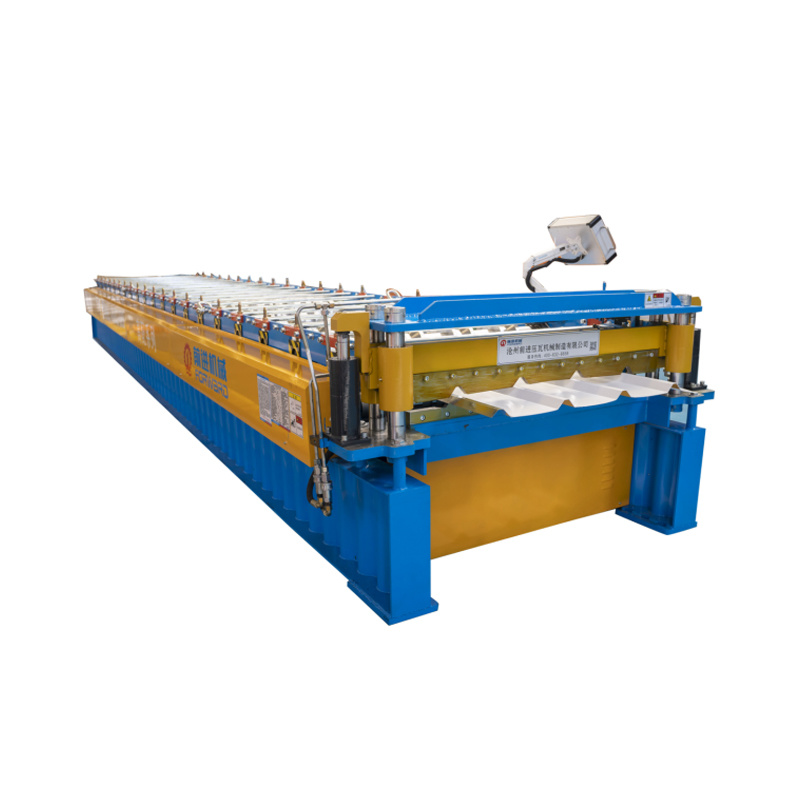
In the world of manufacturing, efficiency and precision are paramount, and roll forming line machines play a crucial role in achieving these objectives. Roll forming is a continuous bending operation in which a long strip of metal (usually in coil form) is passed through successively arranged rolls to form a desired cross-sectional profile. This process is widely used to create components for a variety of industries, including automotive, construction, and appliances.
One of the primary advantages of roll forming line machines is their ability to produce parts with consistent quality and accuracy over long production runs. The mechanical design of these machines allows for tight tolerances, ensuring that each piece meets the specifications required for assembly and function. By utilizing roll forming, manufacturers can significantly reduce material waste, as the process is highly efficient and minimizes scrap metal.
Another benefit of roll forming line machines is their versatility. These machines can be designed to produce a wide range of profiles, from simple shapes to complex designs. This flexibility allows manufacturers to cater to diverse market needs without the need for multiple setups or machinery. Additionally, roll forming can accommodate various materials, including steel, aluminum, and other metals, making it suitable for numerous applications.
The production process begins with the feeding of the metal strip into the roll forming line machine. The machine consists of several stations, each featuring a specific roll configuration that gradually shapes the metal into the desired profile. As the material progresses through the machine, it undergoes deformation, ultimately achieving the final shape required by the manufacturer.
Furthermore, modern roll forming line machines are equipped with advanced technology, including automation and computer numerical control (CNC). These technological advancements enhance the precision and efficiency of the roll forming process, allowing for real-time adjustments and monitoring. As a result, manufacturers can achieve higher productivity levels while maintaining stringent quality standards.
In summary, roll forming line machines are indispensable in the manufacturing landscape. They provide a reliable solution for producing high-quality, consistent parts while minimizing waste and maximizing efficiency. As industries continue to evolve and demand more complex and varied components, the importance of investing in advanced roll forming technology becomes increasingly clear. Manufacturers looking to enhance their production capabilities should consider the benefits and potential of roll forming line machines in meeting their operational goals.
One of the primary advantages of roll forming line machines is their ability to produce parts with consistent quality and accuracy over long production runs. The mechanical design of these machines allows for tight tolerances, ensuring that each piece meets the specifications required for assembly and function. By utilizing roll forming, manufacturers can significantly reduce material waste, as the process is highly efficient and minimizes scrap metal.
Another benefit of roll forming line machines is their versatility. These machines can be designed to produce a wide range of profiles, from simple shapes to complex designs. This flexibility allows manufacturers to cater to diverse market needs without the need for multiple setups or machinery. Additionally, roll forming can accommodate various materials, including steel, aluminum, and other metals, making it suitable for numerous applications.
The production process begins with the feeding of the metal strip into the roll forming line machine. The machine consists of several stations, each featuring a specific roll configuration that gradually shapes the metal into the desired profile. As the material progresses through the machine, it undergoes deformation, ultimately achieving the final shape required by the manufacturer.
Furthermore, modern roll forming line machines are equipped with advanced technology, including automation and computer numerical control (CNC). These technological advancements enhance the precision and efficiency of the roll forming process, allowing for real-time adjustments and monitoring. As a result, manufacturers can achieve higher productivity levels while maintaining stringent quality standards.
In summary, roll forming line machines are indispensable in the manufacturing landscape. They provide a reliable solution for producing high-quality, consistent parts while minimizing waste and maximizing efficiency. As industries continue to evolve and demand more complex and varied components, the importance of investing in advanced roll forming technology becomes increasingly clear. Manufacturers looking to enhance their production capabilities should consider the benefits and potential of roll forming line machines in meeting their operational goals.
Key words:
recommend News
Share
Cangzhou Forward Roll Forming Machinery Manufacturing
Telephone: +86 0317 8308862
Mobile: +86 187 3373 6699
E-mail:info@rollformingmills.com
Skype:james521520
Address: China Hebei Cangzhou Botou City 104 National Road East
Website QR Code

Business License