
-
 Become an influential brand in the world industry!
The company was established in 2008 and is located in Botou, Hebei, a famous casting city in China. -
Products
We continue to develop and create high quality but affordable products
The company is divided into two major factory areas in the north and south. -
Push forward without end
Products are widely used in industrial and civil buildings, such as factories, warehouses, gymnasiums, exhibition halls and other houses and walls. The company has a high starting point and an early start in the products of tile pressing forming and high-altitude tile pressing forming operation platform.
language
The Essential Guide to Roll Forming Line Machines in Manufacturing
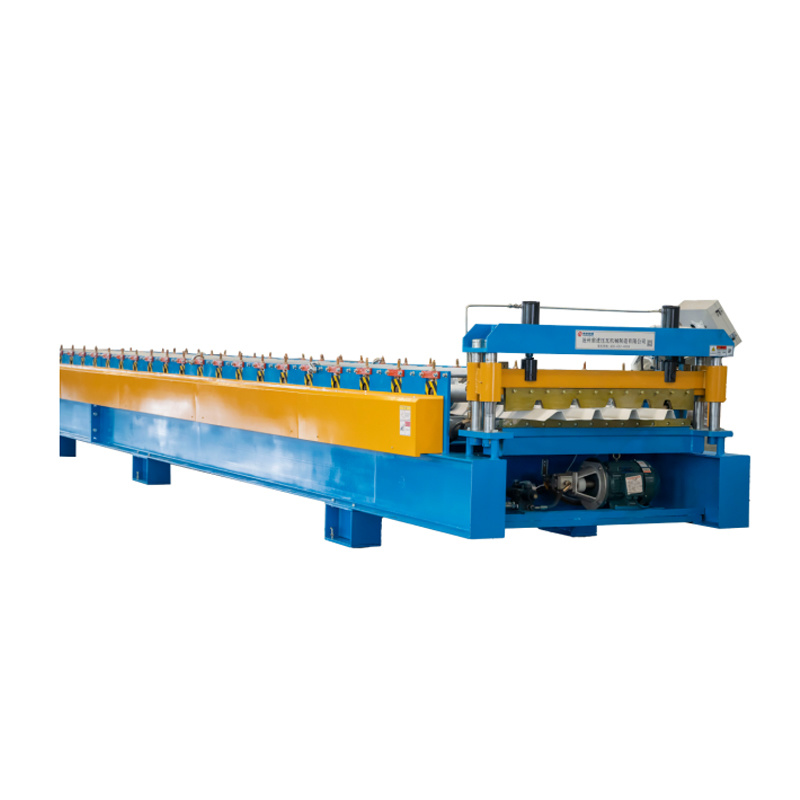
Roll forming line machines are crucial tools in the manufacturing processing of various metal components. Utilizing a continuous bending operation, these machines shape metal sheets into desired profiles through a series of rollers, thereby achieving high precision and efficiency. The roll forming process is particularly advantageous for the production of long lengths of uniform cross-sectional shapes, making it ideal for industries such as construction, automotive, and appliance manufacturing.
One of the primary benefits of roll forming line machines is their ability to produce complex shapes with tight tolerances. The process begins with a flat strip of metal, which is fed through a series of rollers that gradually shape it into the final profile. This method allows for minimal waste, as the metal is expertly formed without cutting, resulting in a more sustainable manufacturing process.
In addition to their efficiency, roll forming line machines can be customized to produce a wide variety of profiles, including channels, angles, and even specialized shapes for specific applications. This level of versatility enables manufacturers to meet diverse customer needs while maintaining high production rates.
Moreover, the automation capabilities of roll forming line machines significantly contribute to increased productivity. Many modern machines are equipped with computer numerical control (CNC) systems that allow for precise adjustments and quick changeovers between different product designs. This automation not only speeds up production but also reduces the likelihood of human error, ensuring consistent quality in the final products.
Furthermore, roll forming line machines are designed with durability in mind. Constructed from robust materials, these machines are built to withstand the rigorous demands of continuous operation. Regular maintenance and proper operation can extend the lifespan of these machines, providing manufacturers with a reliable and long-term investment.
To optimize the use of roll forming line machines in your manufacturing processes, it is essential to conduct thorough material assessments and design evaluations. Understanding the specific properties of the materials you intend to use—such as thickness, strength, and ductility—will inform the setup and adjustments required for efficient production.
In conclusion, roll forming line machines are an integral part of modern manufacturing, offering precision, efficiency, and versatility. By leveraging the capabilities of these machines, manufacturers can enhance productivity and deliver high-quality products that meet market demands. Whether you are looking to produce standard shapes or custom profiles, investing in a roll forming line machine can significantly elevate your manufacturing operations.
One of the primary benefits of roll forming line machines is their ability to produce complex shapes with tight tolerances. The process begins with a flat strip of metal, which is fed through a series of rollers that gradually shape it into the final profile. This method allows for minimal waste, as the metal is expertly formed without cutting, resulting in a more sustainable manufacturing process.
In addition to their efficiency, roll forming line machines can be customized to produce a wide variety of profiles, including channels, angles, and even specialized shapes for specific applications. This level of versatility enables manufacturers to meet diverse customer needs while maintaining high production rates.
Moreover, the automation capabilities of roll forming line machines significantly contribute to increased productivity. Many modern machines are equipped with computer numerical control (CNC) systems that allow for precise adjustments and quick changeovers between different product designs. This automation not only speeds up production but also reduces the likelihood of human error, ensuring consistent quality in the final products.
Furthermore, roll forming line machines are designed with durability in mind. Constructed from robust materials, these machines are built to withstand the rigorous demands of continuous operation. Regular maintenance and proper operation can extend the lifespan of these machines, providing manufacturers with a reliable and long-term investment.
To optimize the use of roll forming line machines in your manufacturing processes, it is essential to conduct thorough material assessments and design evaluations. Understanding the specific properties of the materials you intend to use—such as thickness, strength, and ductility—will inform the setup and adjustments required for efficient production.
In conclusion, roll forming line machines are an integral part of modern manufacturing, offering precision, efficiency, and versatility. By leveraging the capabilities of these machines, manufacturers can enhance productivity and deliver high-quality products that meet market demands. Whether you are looking to produce standard shapes or custom profiles, investing in a roll forming line machine can significantly elevate your manufacturing operations.
Key words:
recommend News
Share
Cangzhou Forward Roll Forming Machinery Manufacturing
Telephone: +86 0317 8308862
Mobile: +86 187 3373 6699
E-mail:info@rollformingmills.com
Skype:james521520
Address: China Hebei Cangzhou Botou City 104 National Road East
Website QR Code

Business License