-
 Become an influential brand in the world industry!
The company was established in 2008 and is located in Botou, Hebei, a famous casting city in China. -
Products
We continue to develop and create high quality but affordable products
The company is divided into two major factory areas in the north and south. -
Push forward without end
Products are widely used in industrial and civil buildings, such as factories, warehouses, gymnasiums, exhibition halls and other houses and walls. The company has a high starting point and an early start in the products of tile pressing forming and high-altitude tile pressing forming operation platform.
Unlocking Efficiency: The Role of Guardrail Roll Forming Machines in Modern Manufacturing
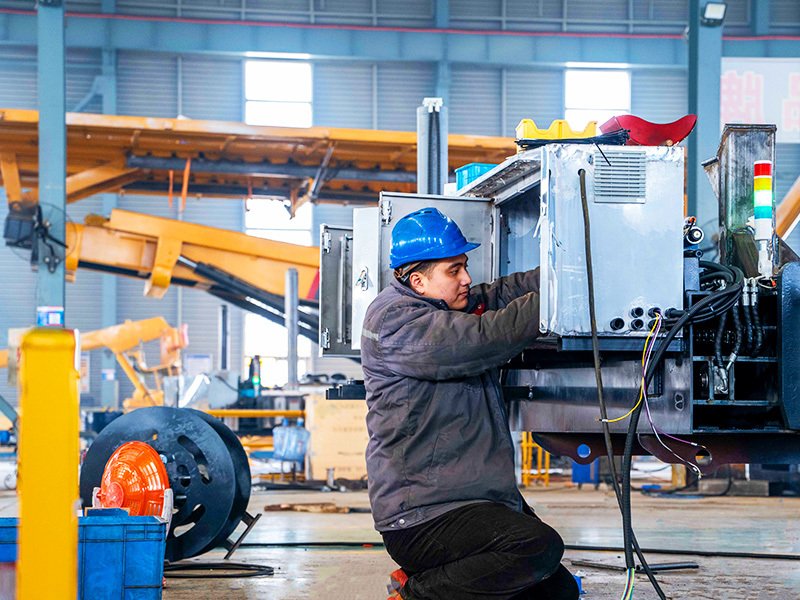
In the manufacturing industry, guardrail roll forming machines play a crucial role in the production of guardrails that ensure safety on roads and highways. These machines utilize advanced technology to form metal sheets into the desired shapes and profiles, which are essential for creating durable and effective guardrails. Understanding how these machines operate and their benefits can significantly enhance the efficiency of manufacturing processes.
A guardrail roll forming machine typically begins its operation with a flat metal sheet, which is fed into the machine. The machine then utilizes a series of rollers that gradually shape the metal into a specific profile that meets industry standards. This process, known as roll forming, is highly efficient, allowing for continuous production of guardrail sections with minimal waste. The precision of the roll forming process ensures that each piece is uniform in size and shape, which is vital for structural integrity and safety compliance.
One of the significant advantages of using guardrail roll forming machines is their ability to produce guardrails at a high volume. This capability is particularly beneficial for manufacturers looking to meet increasing demand without compromising on quality. Additionally, these machines can be customized to produce various types of guardrails, including W-beam and Thrie-beam profiles, enhancing their versatility in the market.
Moreover, guardrail roll forming machines are designed with energy efficiency in mind. Many modern machines utilize advanced technology that minimizes energy consumption while maximizing production speed. This not only reduces operating costs but also aligns with the industry's growing focus on sustainability and environmental responsibility.
Another critical aspect to consider is the maintenance of guardrail roll forming machines. Regular maintenance ensures optimal performance and longevity, reducing downtime and associated costs. Manufacturers should establish a routine maintenance schedule, which includes checking for wear and tear on critical components and ensuring that the machine's alignment remains accurate.
Furthermore, the integration of automation and digital technologies into guardrail roll forming machines has streamlined operations. This integration allows for better monitoring of the production process, leading to improved quality control and reduced human error. As manufacturers continue to embrace Industry 4.0 principles, the ability to collect and analyze data from these machines will provide insights that can drive continuous improvement.
In conclusion, guardrail roll forming machines are essential tools in the manufacturing sector, contributing to the efficient production of safety-critical guardrails. By understanding their operation, benefits, and maintenance needs, manufacturers can enhance their production processes and maintain a competitive edge in the industry. As safety demands continue to rise, investing in advanced guardrail roll forming machines will be crucial for meeting market needs while ensuring the highest safety standards are upheld.
Key words:
recommend News
Share
Cangzhou Forward Roll Forming Machinery Manufacturing
Telephone: +86 0317 8308862
Mobile: +86 187 3373 6699
E-mail:info@rollformingmills.com
Skype:james521520
Address: China Hebei Cangzhou Botou City 104 National Road East
Website QR Code